

What You Need to Know About the Social Media 'Addiction' Trial Starting This Week
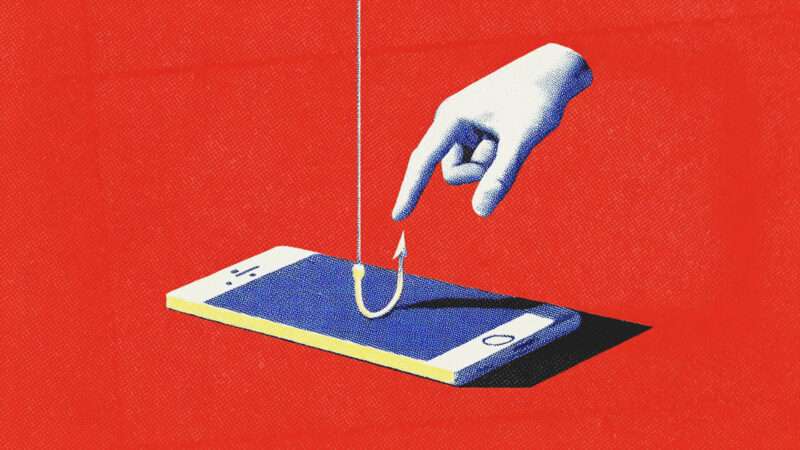
The Metaverse may have flopped, but Meta is still on trial for supposedly altering reality.
The parent company of Facebook and Instagram "has profoundly altered the psychological and social realities of a generation of young Americans" by designing its products "to entice, engage, and ultimately ensnare youth and teens," four states say.
Didn't We Do This Already?
The first thing you might think upon hearing that Meta is on trial today for purportedly harming kids' mental health is "Wait, didn't we already do this?" Yes and no.
There was a similar case against Meta in New Mexico state court. A judge last week ordered Meta to pay $567 million in that case.
And there are actually thousands of plaintiffs—including private individuals, school districts, and state attorneys general—suing several Big Tech companies in federal court over the allegedly addictive features on their social platforms. A judge chose three test cases (known as "bellwether" cases) from this multidistrict avalanche of civil lawsuits. The first of those was decided in March, with Meta and Google ordered to pay millions over psychological harm they purportedly caused to a now-20-year-old woman known in court as Kaley G.M.
The trial that starts this week (People of the State of California, et al., v. Meta Platforms, Inc., et. al) was brought against Meta by the states of California, Colorado, Kentucky, and New Jersey. (In total, 29 states are part of the multidistrict litigation, but only four of those states are trying their cases together in the trial that starts this week.)
Jury selection in the case will begin today, with opening arguments scheduled to start next week. The trial is expected to last seven weeks, Reuters reports. The judge in this case, Yvonne Gonzalez Rogers, "will oversee the trial and issue her decision after it concludes in October," but she "made the unusual decision to empanel an advisory jury to issue a decision on specific questions that she will use to guide her ruling. "
If the states get their way, not only will Meta be on the hook for massive fines but also for making nationwide changes to its platforms. "Big damage awards and judicial dictates about features both potentially pose existential threats to social media defendants," law professor Eric Goldman told Reuters.
Speech by Any Other Name
Attorneys general for California, Colorado, Kentucky, and New Jersey have alleged that Meta has "develop[ed] and implement[ed] features that it knows induce young users' extended, addictive, and compulsive social media use."
Meta argued that the suit is largely barred by Section 230 of the federal Communications Decency Act, which says interactive computer services generally aren't liable in civil court actions arising from the speech of their users. Section 230 is what allowed social media platforms, search engines, and much of the web as we know it to take off.
But after years of being barred from suing social platforms, state prosecutors have gotten creative. They're now claiming that this isn't about user-generated speech but about tech companies' product design. In this case, the states claim that providing photo filters is contributing to teens' body dysmorphia and that "psychologically manipulative" features like displaying post "like" counts, sending notifications, and using algorithms to curate content around a user's particular interests are what's keeping kids hooked, not the actual content on Facebook and Instagram.
It's a silly claim, since clearly there could be no "addiction" to social media if not for the content or communications contained on these platforms. Likewise, there could be no feeling bad about other users' filtered photos if the photos didn't exist. And there could be no "FOMO"—or fear of missing out, something the states accuse Meta of fomenting—without there being content worth missing out on.
That content is mostly First Amendment–protected speech. And protected or not, this is content created by social media users, not the platforms themselves. In theory, Section 230 and the First Amendment should preclude lawsuits like this one.
But juries aren't made up of communications and constitutional law experts. Jury members aren't thinking about things like Section 230. Juries just hear sad stories about kids using a lot of social media and feeling bad about themselves or their lives. They're told that the "addictive" features of social media caused kids' problems and asked to hold Big Tech "accountable."
So far, it's working. A jury ruled in favor of Kaley G.M. in the earlier federal bellwether case. So, too, in a case in New Mexico state court. And in the latter, a judge (separately from the jury) also found Meta liable. One would hope that a judge ultimately deciding this case, rather than a jury, might lead to better outcomes, but judges are susceptible to moral panic and novel (if ridiculous) legal theories, too.
'Deception' Claims at Heart of Suit
The attorneys general now suing Meta say that it violated their consumer protection laws by having "misled the public about the substantial dangers of its Social Media Platforms" and "ignored the sweeping damage these Platforms have caused to the mental and physical health of our nation's youth."
There are a host of reasons why this argument doesn't hold water, including the fact that no one can actually say whether social media use causes teen problems or whether excessive reliance on social media is simply a symptom of struggling socially or already suffering from mental distress.
It's plausible that some young people—those already isolated, depressed, or otherwise dealing with certain negative circumstances or mental states—might find their issues worsened by time spent on social media. But the fact that most teens are capable of using social media in moderation and not developing dependence on it suggests that there's nothing inherent in the design of these products that is causing dependence.
This shouldn't be that hard for people to accept. There are plenty of places and products—potato chips, porn, Pelotons, casinos, shopping malls, etc.—which most people can visit or use responsibly that nonetheless become sites of compulsion and disordered habits for some people. Research suggests that social media might work the same way.
The states here argue that Meta was "deceptive" by not telling people that social media would harm them. But given what we actually know, it would be deceptive for Meta to say that it would.
Social Media Arguments Could Be Used Against Religion, Too
Where these cases get especially dicey is that the "substance" supposedly addicting teenagers is legal speech.
Does restricting social media (or video game) design practices on the grounds that some users get "addicted" violate the First Amendment? Constitutional lawyer and Volokh Conspiracy blogger Eugene Volokh tackled this question recently, starting out with a thought experiment in which we apply the same arguments used against social media to religious practices.
Say some religious practice was viewed as causing emotional or financial harm—e.g., by leading some adherents to feel guilty about their sexuality, to distance themselves from family members, or to give substantial portions of their assets to the religious organization. And say the practice was viewed as stemming from the adherents' nonrational decisions and emotional vulnerability, coupled with the religion's fostering intrusive urges and compulsions through techniques of reinforcement and habit formation that exploited features of people's neurotransmitter systems.
I take it that even so, the Free Exercise Clause would generally preclude restricting those practices. Many religious people derive personal value from their religious beliefs. Religious practice is constitutionally protected. And people often value their own religiously motivated decisions very differently than how other people might value those decisions.
In a few situations, the harm to the religious observer may be so sharp and immediate—or the mechanisms of control may be seen as so obviously improper—that the law may indeed intercede. But any such intercession must be based on more than some general claim of "addiction" to religious beliefs, or assertions of emotional harm or modest financial loss. And that remains true as to minors' participation in religious practices as well as adults' participation, at least so long as the minors' participation is tolerated by parents.
This is the same way we should think about social media "addiction," Volokh argues:
Here too, the supposedly addictive features can be valuable to many users, even if they are harmful to some others. The design of speech products is presumptively protected by the First Amendment. And people often value features of speech products very differently than other people do. The First Amendment should thus largely preclude restrictions aimed at rescuing people from their own supposed propensity to becoming addicted to features of speech, just as it would preclude restrictions aimed at rescuing people from supposedly addictive religious behaviors.
The religion analogy is especially apt, since both religious practices and social media speech fall under the rubric of the First Amendment.
But if these social media "addiction" arguments work, I can imagine them being applied to all sorts of places and products. After all, aren't most leisure activities—and many restaurants and food products, too—designed in ways that encourage customers to keep coming back? Don't most rely on some sort of psychological or neurological principles to inform their marketing, their recipes, their layout, etc.?
If Meta and other Big Tech companies are guilty of "addicting" users simply by designing highly appealing products—and failing to discontinue these products or slap warning labels on them just because some subset of users showed signs of problematic use—then basically any industry, religious practice, leisure space, or lifestyle program could be guilty, too.
In the News
Bernie Sanders is threatening AI companies:
Bernie Sanders has written a letter to Sam Altman, Dario Amodei, and Mark Zuckerberg urging them to immediately pause all AI development in the interest of humanity. And he warns if they do not take appropriate action now, the US Senate will. pic.twitter.com/xwLB0FGmF9
— Andrew Curran (@AndrewCurran_) August 10, 2026
Meanwhile, "a separate letter released on Monday by a group of House Democrats called on House Speaker Mike Johnson to 'immediately schedule' hearings with the CEOs of the largest A.I. companies," notes The New York Times:
Politicians are increasingly focusing on A.I. amid growing unease from voters who worry that the technology will raise their electricity costs, eliminate their jobs and hurt the value of their retirement savings if the industry falters. Much of their attention has been on banning or limiting the spread of data centers, which some Americans blame for rising energy bills and increased pollution.
The two letters signal that progressive Democrats want to go further to regulate the development of the technology itself.
If the executives failed to act, lawmakers would step in, wrote Mr. Sanders. And House Democrats floated their own warning of more regulation.
On Substack
Hiding censorship in "cybercrime" bills. The United Nations Convention Against Cybercrime treaty has been signed by more than 70 countries, and ratified by three. But while "the treaty purports to improve international cooperation in addressing crimes taking place using computer systems," it actually does much more than that, Sarah McLaughlin of the Foundation for Individual Rights and Expression (FIRE) points out:
Cooperation is not limited to specific online criminal acts like fraud or phishing. Instead, the treaty pushes nations to share personal data that other nations request about individuals accused of committing "serious" crimes.
But there's an important question here. What constitutes a "serious" crime? The treaty does little to define it other than clarifying that it's a crime carrying at least a four-year prison sentence as a punishment. For billions of people around the world, speech is a crime that warrants a long prison term.
The treaty also would command nations to adopt legislation and measures "as may be necessary to oblige a service provider to keep confidential" the execution of government searches for user data. Even more concerning, a nation seeking data from other countries can request that the user under surveillance not be notified and "may require that the requested State Party keep confidential the fact and substance of the request."
In essence, it will help facilitate repression. It could even encourage governments to toughen penalties for crimes involving speech (since only crimes punishable by at least four years in prison are eligible for the cooperative deal).
"A review of cybercrime legislation that has emerged in the wake of the treaty suggests that the free speech problems surrounding online 'crime' and the UN treaty are just beginning," suggests McLaughlin. Read the whole thing here.
More Sex & Tech News
• "An anti-sex-trafficking nonprofit in Utah whose founder resigned after multiple women accused him of trafficking and sexual abuse has won a federal contract to provide legal services to unaccompanied immigrant children in government custody," The American Prospect reports. The group—now called Our Rescue, but previously and better known as Operation Underground Railroad—has been widely criticized for its dubious and dangerous tactics, which involve conducting unauthorized "sex trafficking stings" in foreign countries.
• The Department of Homeland Security is using a lawsuit challenging its digital surveillance of protesters to try and do more digital surveillance of protesters.
• "Prostitution arrests have been decreasing over time in the United States," according to a new paper published in the August edition of the Proceedings of the National Academy of Sciences. "The arrest rate has fallen dramatically from 50 per 100,000 in 1985 to less than 5 per 100,000 in 2022."
• Erica Schwartz, who was recently confirmed as the Centers for Disease Control and Prevention's next director, said "Abortion surveillance is absolutely a critical component of what the CDC is currently doing."
• The families of four teens who committed suicide are claiming in court that Meta, TikTok, Snapchat, and YouTube are responsible for their deaths.
• Disney struck a deal with TikTok that will let creators make videos featuring Disney characters that could subsequently be shared on both TikTok and the Disney+ streaming platform.
• An error involving the posting of an escort's photos on an escort company website isn't a violation of the new national law barring the publishing of nonconsensual porn, a court held.
• Why normies aren't using AI agents: "Today's agentic products are largely not designed with consumers in mind," writes Maxwell Zeff at Wired. "Tech companies are shipping the most impressive things their models can do—such as navigating a website or writing code—rather than creating products tailored to their customers' desires."
The post Another Social Media 'Addiction' Trial Starts Today. Its Claims Are Weak—but Dangerous. appeared first on Reason.com.
FIP XML/RSS/RDF Newsfeed Syndication https://freeinternetpress.com/rss.php
© 2026 FreeInternetPress.com
Free Internet Press is licensed under a Creative Commons Attribution 3.0 United States License. You may reuse or distribute original works on this site, with attribution per the above license. Any mirrored or quoted materials may be copyright their respective authors, publications, or outlets, as shown on their publication, indicated by the link in the news story. Such works are used under the fair use doctrine of United States copyright law. Should any materials be found overused or objectionable to the copyright holder, notification should be sent to [email protected], and the work will be removed and replaced with such notification.
Please email [email protected] with any questions.