

The Woolly Mammoth’s Comeback Is Taking Longer Than Expected
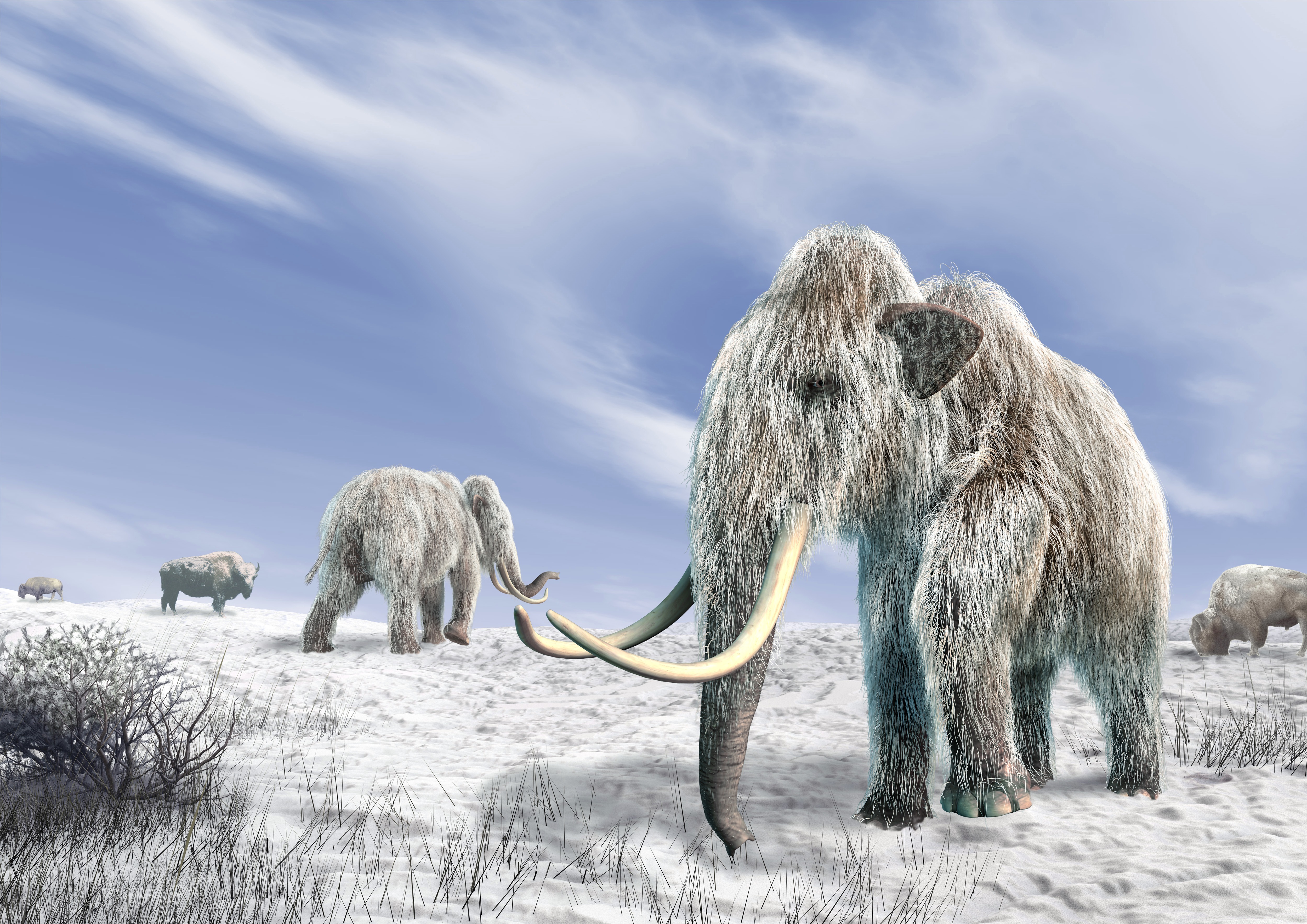
If you’ve been excitedly awaiting the return of the woolly mammoth, you’ll have to be patient a little longer. It was in 2021 that the newly established, Dallas-based company Colossal Biosciences announced plans to use modern gene-editing technology and DNA harvested from mammoth remains to manufacture a mammoth embryo, implant it in the womb of an elephant surrogate, and bring the great, gentle, six-ton beast—which vanished from the planet more than 4,000 years ago—back into the modern world. The target date for a pregnancy was 2027; the target date for the birth was 2028.
No more. In a recent conversation with TIME, Colossal CEO and co-founder Ben Lamm concedes that those goal posts have moved more than a little. “We are thinking it will be in the early 2030s,” he says. “We don’t have a hard date. Not 2036, but not 2030 either.”
In just the past year, Colossal has learned vastly more about both the mammoth and the elephant genomes than has ever been known before, not only improving the odds that the mammoth can be brought back to life, or de-extincted, but also unpacking basic genetic science that could one day have knock-on effects for humans—including potentially increasing resistance to cancer.
Bringing back the dire wolf
Colossal proved its de-extinction chops in the spring of 2025, when it announced that it had brought the extinct dire wolf back to life, editing the genome of the closely related gray wolf to replicate the features of its vanished cousin—including a white coat, larger size, more powerful shoulders, wider head, larger teeth and jaws, more-muscular legs, and characteristic vocalizations, especially howling and whining.
To work that genetic magic, Colossal scientists collected dire wolf DNA from an ear bone and a tooth unearthed in two ancient samples, sequenced the genome, and compared it to that of the gray wolf. They then harvested cells from a living gray wolf and made 20 edits on 14 genes using the CRISPR-Cas9 gene-editing tool, which produced the critical dire wolf characteristics. Finally, they extracted the nucleus of the edited cell, inserted it into a domestic dog ovum whose own nucleus had been removed, and implanted the resulting embryo into the womb of a domestic hound. Nine weeks later, the dire wolves were born.
Why woolly mammoths are so hard to de-extinct
To do something similar with the woolly mammoth, Colossal discovered that the work would be a heavier genetic lift than their research teams had originally expected. The initial estimate was that it would take edits to about 60 genes to turn an elephant nucleus into a mammoth nucleus that could then be used to create a mammoth embryo. Now that number is about 150—and rising.
Among the genes and regulatory switches that have been discovered are ones that shrink the mammoth ear to about one-tenth the size of an elephant’s ear. In the hot climates in which Asian and African elephants live, large, heavily vascularized ears serve as heat dumps, cooling the blood and the body as a whole. That would not do for the mammoth, which made its home during the Ice Age and needed to husband all the heat it could. Mammoth tails are shorter than those of elephants too— for the same heat-retention reason—and Colossal scientists have found the gene that expresses that as well.
The genetics of the mammoth’s characteristic heavy coat have also been unpacked. Nearly all hairy mammals—humans included—have oil-secreting glands known as sebaceous glands in the skin. The oil keeps individual hairs supple and prevents them from drying and breaking. Elephants, which have a very sparse covering of bristly hair across their bodies, were thought to be an exception to this rule. That made the job of engineering a mammoth from an elephant more difficult, since mammoths surely had sebaceous glands to sustain their extravagant coat. But Colossal researchers conducted dissection and close examination of samples of elephant skin and found that that earlier received wisdom was wrong—the skin does contain small, rudimentary sebaceous-like structures. The trick now is to isolate the genes that code for the glands and edit them to create the fully developed version the mammoth will need.
The researchers also analyzed the makeup of elephant hair and determined that 90% of every strand is composed of nine different proteins. They then tracked down which genes code for that protein production and govern hair developmental patterns, which typically include periods of growth, rest, and regrowth. Tests of these genes are underway, sometimes with the assistance of other animals.
In March 2025, Colossal revealed that it had created a small brood of 38 woolly mice, engineered with mammoth coding for shaggy hair written into their genome. The mice have thrived and bred, passing on their long, coarse hair to their pups. That was a good start, but mice aren’t mammoths, and to study how effective the genetic editing is, researchers will need to work with a larger mammal. Colossal promises that a woolly pig is coming, though the company does not say when it will be revealed.
Digging deeper into the genome of the mammoth, Colossal scientists have extracted bits of its regulatory DNA and inserted them into living elephant skin cells and watched as regulators turned the behavior of the genes up or down—critical work if you want to design other genes to order.
“It’s a little weird and Frankensteiny,” says Lamm, “but we’ve done that.”
Potential implications for humans
Colossal researchers are also exploring one of the elephant’s more remarkable features: its resistance to cancer. As a large-bodied mammal, elephants ought to be highly susceptible to the disease, especially considering that an elephant's body contains 100 times more cells than a human’s, creating more opportunities for cancer to occur. But cancer accounts for less than 5% of elephant deaths, compared to 16% for humans.
That was a longstanding mystery until recently. Both human and elephant cells are now known to carry a tumor-suppressor gene labeled TP53. When DNA in a cell is damaged—by cancer or other means—the gene codes for the release of the p53 protein, which either halts the damaged cell’s growth cycle to allow for repair, or, if the DNA is too corrupted, kills the cell. Humans carry two copies of the TP53 gene, while elephants carry 20—making for much greater cancer resistance. Additionally, elephants but not humans carry what is known as an LIF6 gene, which also produces a p53 protein, one that specifically targets the mitochondria—an energy-producing organelle located in the cellular cytoplasm—of damaged calls, killing them before they can divide and spread.
Other researchers are already exploring if p53 proteins can be manipulated in humans to increase cancer resistance. Colossal is casting a wider net. On August 20, it announced the launch of a new company, Astromech, which uses AI and deep learning to analyze the genomic data of any species, trace its evolutionary history, and forecast its future, anticipating its adaptation to changing environment, its disease susceptibility, and the possibility of so-called genetic bottlenecks—or lack of genetic diversity—that occur when an endangered population of animals grows too small. Colossal scientists are using Astromech to study elephants’ cancer resistance in depth—which could have broader uses and implications.
“Colossal is not conducting research on humans, but its work with mammoth, elephant, and other genomic datasets could yield insights relevant to human cancer research,” says a company spokesperson. “Understanding mechanisms such as elephants’ TP53-related cancer resistance is exactly the kind of problems Astromech is trying to understand, leveraging the mammoth, elephants and other datasets.”
For now, the goal of turning all of this scientific benchwork into a walking, breathing, breeding mammoth goes on—even if at a slower pace than originally predicted. “I hate to say this, because I don’t want to call the mammoth a product,” says Lamm, “but it will be a better product because of our deeper analysis of what truly made a mammoth a mammoth.”
FIP XML/RSS/RDF Newsfeed Syndication https://freeinternetpress.com/rss.php
© 2026 FreeInternetPress.com
Free Internet Press is licensed under a Creative Commons Attribution 3.0 United States License. You may reuse or distribute original works on this site, with attribution per the above license. Any mirrored or quoted materials may be copyright their respective authors, publications, or outlets, as shown on their publication, indicated by the link in the news story. Such works are used under the fair use doctrine of United States copyright law. Should any materials be found overused or objectionable to the copyright holder, notification should be sent to [email protected], and the work will be removed and replaced with such notification.
Please email [email protected] with any questions.