

How Zoe Kazan Made East of Eden Her Own
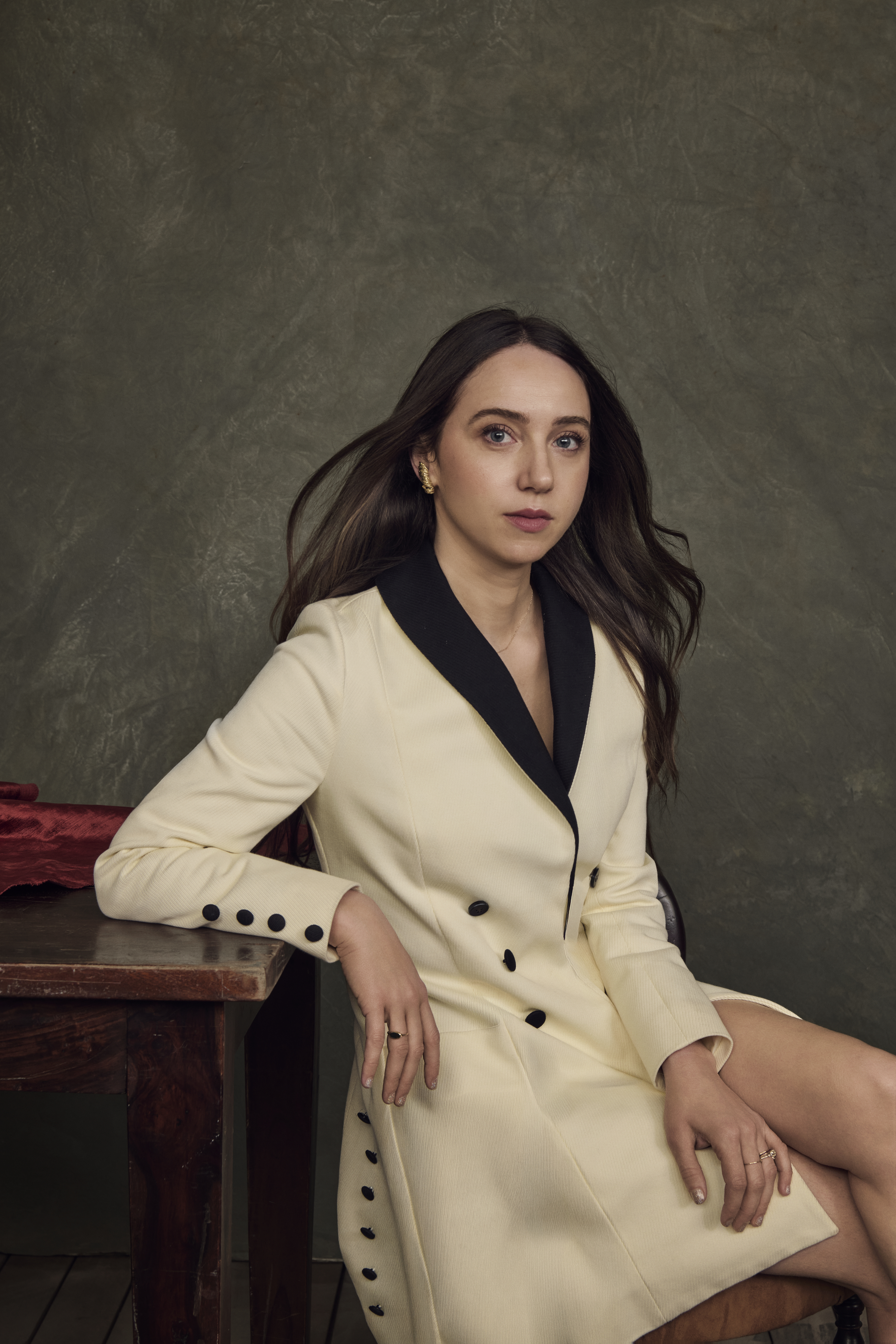
In June 2024, Zoe Kazan boarded a flight to New Zealand. She was excited. For a mother of small children, a quiet solo flight is a vacation unto itself. She scrolled through the in-flight movies. “They had East of Eden, and I was like, ‘I guess the gods are conspiring,’” she says. She pressed play.
Until then she had been avoiding rewatching her grandfather Elia Kazan’s 1955 masterpiece. She was flying halfway across the world to scout locations for her own version of East of Eden, a seven-part adaptation of John Steinbeck’s novel that premieres on Netflix on Oct. 1. She hadn’t wanted the film to influence her. But her script, which she’d begun working on in 2020, was finally turned in.
As the end credits rolled, she sighed in relief. “It was less like the book than I remembered,” she says. The film, which introduced a brooding James Dean to cinema, is more inspired by the novel than a direct adaptation of it: It covers only the last third, crucial characters have been excised, and famous lines are missing. “For me,” says Kazan over cold brew, extra ice on the side, at a Brooklyn cafe on an August morning, “the power of the story is how, over 50 years, it shows history repeating itself—or not.”
Her faithful adaptation covers the entirety of the multi-generational saga, which reimagines the tale of Cain and Abel twice over. Cyrus (Tracy Letts in the new series), a self-mythologizing Civil War veteran, prefers his gentle son Adam (Christopher Abbott) to the violent one, Charles (Mike Faist). A generation later, Adam’s twin sons Aron and Cal (Joe Anders and Joseph Zada) vie for the affection of their emotionally absent father. Kazan wrangles with the novel’s central question: Whether those boys can escape the shadows of their family history and forge their own paths—and whether America, carrying the sins of slavery, campaigns of violence against Native Americans, and racism against immigrants building a future in the West, can do the same.
Both versions are, in Kazan’s estimation, self-portraits of the artists who made them. Renowned for directing A Streetcar Named Desire and On the Waterfront and co-founding the influential Actors Studio from which the school of “method acting” was born, Elia Kazan was called before the House Un-American Activities Committee in 1952. The Hollywood blacklist was in effect and, Faced with the possibility of never being able to work in Hollywood again, he named names. His granddaughter has never read his autobiography, though she has tried. “There’s some very young part of me that’s like, I still want my grandpa to be my grandpa and not have access to all of this adult stuff,” she says. But she believes that Elia Kazan, who died in 2003 when she was 20, saw himself in the black sheep of the family: “He had this cold and demanding father, and I think he was projecting onto Cal.” Made during a period when the director was facing significant backlash, his version focuses on guilt, rejection, and alienation.
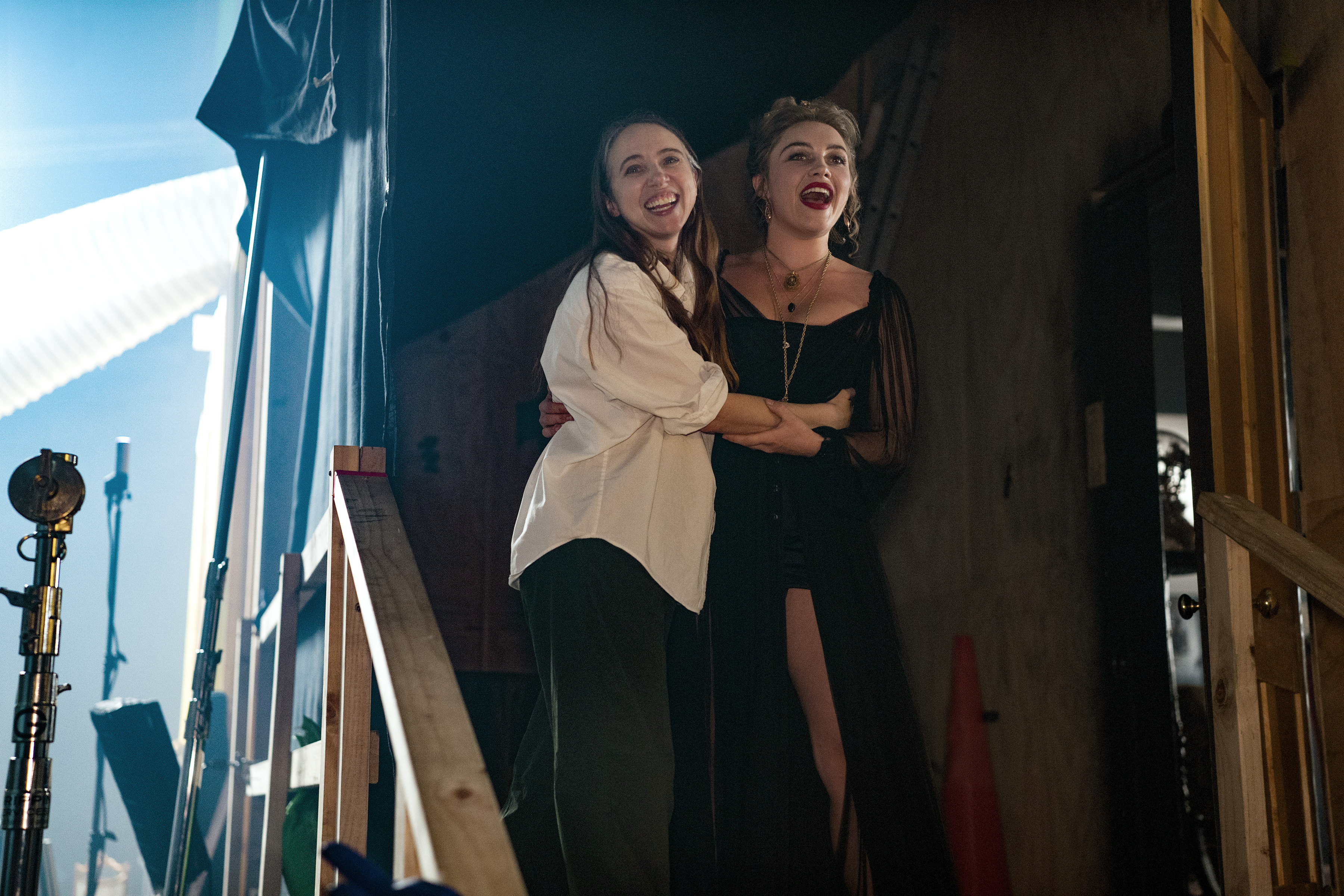
What most intrigued Zoe Kazan, a new mother when she started on the script, were characters her grandfather rewrote or omitted: Cathy (Florence Pugh), a mother who walks out on her infant sons and whom Kazan calls “irredeemable, irresistible, and so full of agency,” and Lee (Hoon Lee), a Chinese American servant who steps in to raise the boys.
Kazan may live closest to Cathy and Lee in her script. But perhaps the reason she was drawn to the project is the notion of living and working in her grandfather’s shadow. One cannot help but draw the parallel between her and the grandchildren in East of Eden, struggling with whether to embrace or break away from a burdensome legacy. “The irony was not lost on me. There’s a literal way that I’m following in my family’s footsteps,” Kazan admits. “I don’t think I’d be doing my job as an artist if I weren’t thinking about my family while making this family story.”
Zoe Kazan was a teenager when she fell hard for Steinbeck. At 15, the Los Angeles native embarked on a Steinbeck-themed road trip up the California coast with her parents, dog-eared East of Eden in hand. Years later, she asked her agents to contact her if anyone purchased the rights. The call came in December 2019, while Kazan was shooting in Australia. She emerged bleary-eyed from a flight back to L.A. with her 15-month-old to pitch her idea to the buyers. “I talked about America and the way that we don’t want to look at our shadow, and how the book argues that embracing your shadow, all of yourself, the good and the bad, is the only way to change,” she says.
By then she had built a career not just as an actor in The Big Sick and She Said but as a screenwriter with Ruby Sparks, a satirical take on the manic pixie dream girl, and Wildlife, a drama she co-wrote with her partner, Paul Dano. She landed the East of Eden job and spent the next six years in Steinbeck’s world, and much of that time in the head of one of literature’s most complicated female characters, Cathy.
Cathy appears mysteriously on Adam and Charles’ doorstep, badly beaten. From there, she vacillates between a mesmerizing seductress and evil incarnate. She’s a manipulator or a survivor, depending on your perspective. “I don’t think anything in her background excuses her behavior,” says Kazan, laughing. “At the same time, there’s something really compelling about her insistence on her autonomy and selfishness, especially as a woman. I was such a good girl, reading that felt very exciting.”
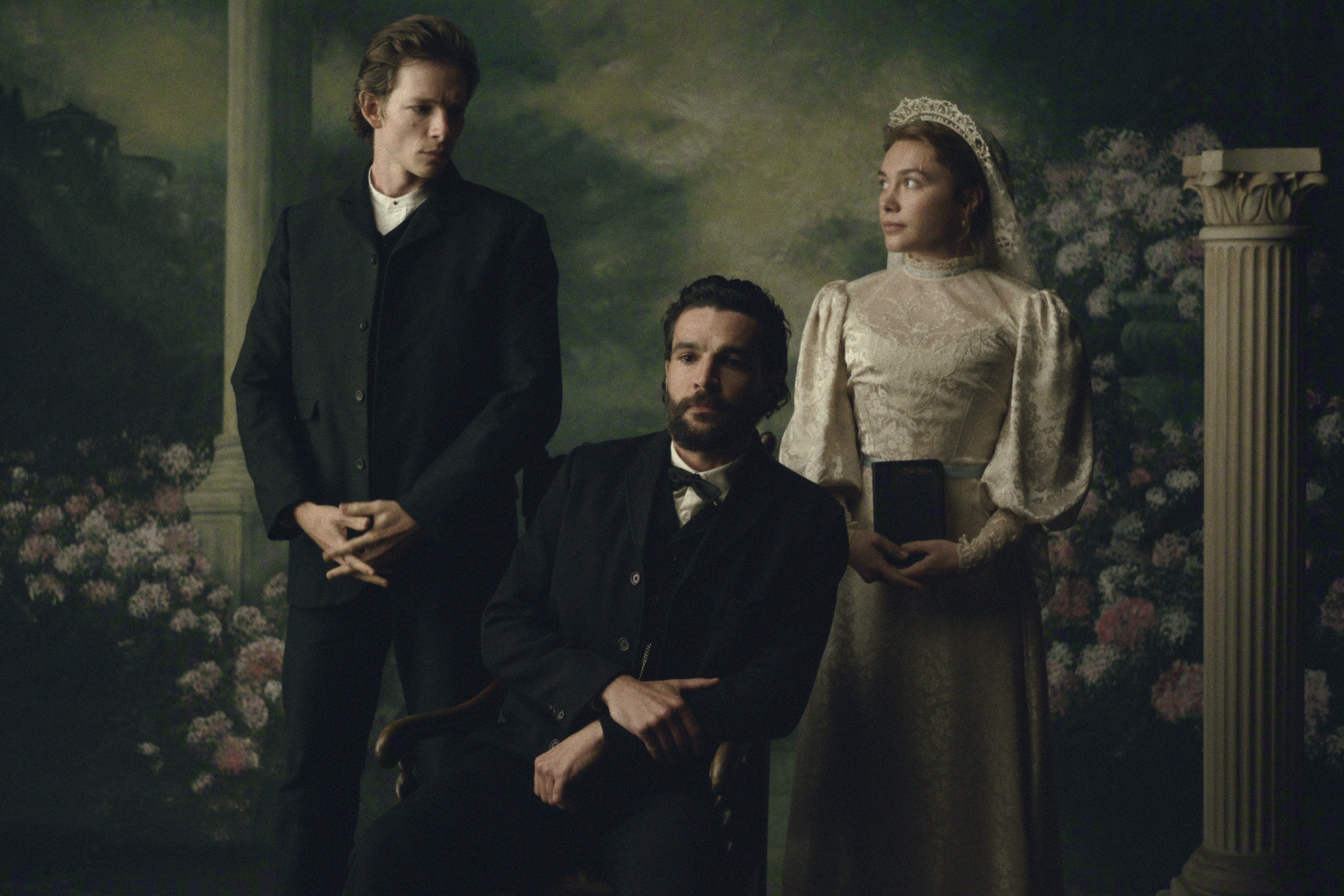
Cathy became the center of Kazan’s adaptation. Often accused by the narrator of being a liar, Cathy in fact often tells the truth. It’s just not a truth the men around her want to hear. She says she does not want to move to California. She says does not want kids. She says she does not want to stay once Cal and Aron are born. Today’s readers may be appalled by the way she earns her freedom, but we can also sympathize with a woman whose wishes are so blatantly ignored.
Not even Steinbeck could decide. In letters to his editor, “He starts out like, ‘You’ve never read a monster like this,’” says Kazan. “Then he starts referring to her like, ‘I’ll finally get back to my dear Cathy.’ He seems very seduced by her.” Kazan relied heavily on the book to flesh Cathy out. This is not some girlboss version of one of literature’s great antagonists. “I think the text supports my reading,” she says. “I don’t like historical fiction that imposes modern values on the past. I don’t think Cathy is a feminist. I don’t think she cares about other women. I think she cares about herself.”
Pugh was the only actor Kazan named in her script. She’s made an career of morally complex characters in Lady Macbeth, Midsommar, and even the Marvel movies. As Cathy, she’s transfixing. “Florence looks like a doll, but she has this steel rod inside,” says Kazan. “Cathy is all action, like a shark that always has to be moving forward.”
East of Eden has aged so well in some respects that Kazan might get accused of making modern updates by those who haven’t read the text. After Cathy leaves Adam, the story centers on two men, Adam and Lee, platonically raising a family and navigating the complicated gender-role implications of that arrangement.
Lee’s parents were brought from China to build the railroads. He spends his life being the smartest man in any room but feigning broken English to make the white men around him comfortable, only revealing his intellect to those he trusts. For a few chapters, Lee departs for San Francisco to pursue the dream of opening his own bookstore. He returns with little to say about what happened while he was gone. "Even though [Steinbeck] imagines things like Lee code-switching, which is such a shocking thing to read in this book from 1952, I felt like it was this mystery of what happens to Lee when he goes away,” says Kazan. “I wanted to give him a little bit more." Kazan brought in the novelist Alexander Chee to build out the scenes for Lee that Steinbeck left off the page.
She wrote eight episodes, including one exclusively following Lee on his San Francisco excursion. Netflix greenlit seven. "It was the obvious stuff that had to go, partially because it's off the main track of the story, but also because it's all new locations. It would have added a third to our budget,” she says. She had to weave the plot into another episode. “I was so sad to lose that episode, but I do think it's stronger for it, because he's not siloed. He's part of the cohesive story."
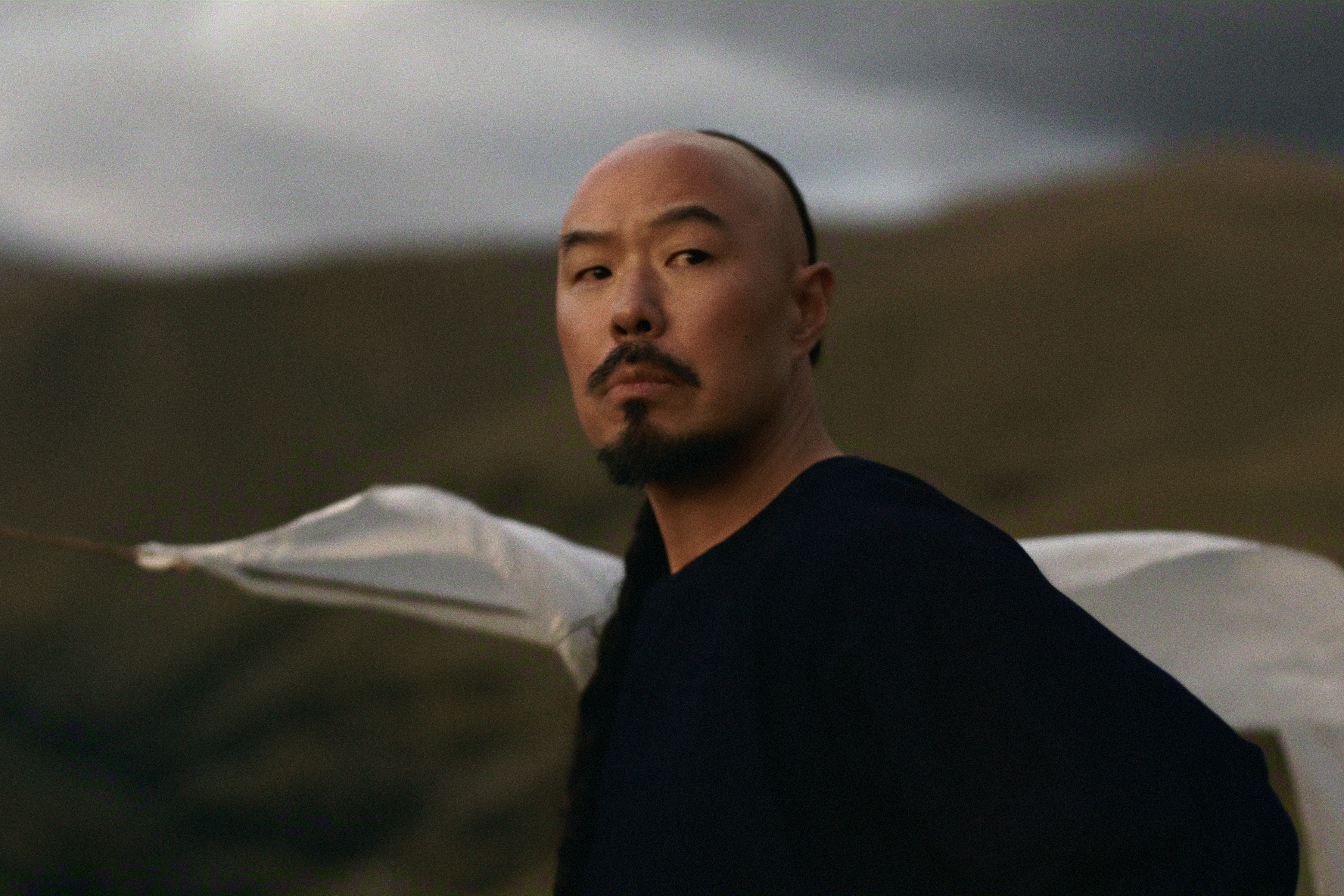
When Adam checks out psychologically for the better part of a decade, Lee raises Cal and Aron, deliberately trying to prevent in this new generation the fractures and violence of the previous one. Steinbeck’s narrator observes Lee’s domestic and emotional work with admiration and grants Lee an unexpected dignity given the time period. The Netflix series doubles down, lingering on Lee’s face to capture a flicker of resigned sorrow at moments when Adam claims ownership over the boys and their accomplishments.
“A lot of this caretaking, doing the invisible work, my experience of becoming a mother, is embedded in Lee,” Kazan says. But so, too, is she Cathy. “There’s also a part of me, as there is for many mothers, that’s like, ‘I love my children more than anything, and I wish I could disappear.’”
Early in our nearly two-hour conversation, Kazan asks a server to lower the music so we can dig our teeth into Lee’s famous monologue on timshel, a Hebrew word that translates to “thou mayest” in the Cain and Abel story. It offers Cain and others the choice to triumph over sin. It frees younger generations from repeating the mistakes of their forebears. One can guess why this may ring true for Zoe Kazan. We circle the question of the divide between an artist and their art as ice melts in her cup. I bring up a tweet she wrote over the summer.
When Taylor Swift got married in July and observers clocked the absence of a longtime friend from the wedding, Kazan posted her interpretation of the situation online: "I think she didn't invite her because she has come to the end of her marriage plot, thus cutting off access to her first great subject. Rather than root for her own divorce, she is generating the next chapter of interpersonal drama for herself via female friendship." The tweet read like a literary critic’s interpretation of a pop star’s public art. Swifties called it out of line. Kazan deleted it.
"When an artist makes her personal life the subject of her work, and has her wedding in one of our nation's foremost arenas with billboards outside saying ‘Just Married,’ I don't think it's a personal critique to talk about what they're doing in their personal life," she says. "I am very careful to be kind online. I never say anything mean about anyone's work. So I erased those tweets once I realized how upset people were by it. Should I have known better? Probably. But I had never been on the receiving end of Swifties before, so I didn't know."
I have spent much of the interview trying to divine how much of East of Eden is an extension of Kazan herself—she cites the timshel passage when referring to her relationship with her family’s legacy. Viewers familiar with her history may theorize about her connection to the material in the same way that Kazan offered up a theory about Swift. “[Swift] puts the names of her exes in her liner notes. There's a way that she has made her private life incredibly public and explicit,” she says. “The overlap with my personal history in this was all very conscious, and made more conscious the longer I worked on it. But it’s not the explicit subject of it.”
She hopes the story opens doors inside viewers, the way it did for her. “I think we have tendencies as humans to feel the weight of our nation’s original sins, or our family’s original sins, that they are so shameful and heavy that anything good we do is going to be insignificant,” she says. “And then I think we have this other, very Trumpian impulse, of whitewashing the past. I think the thing the book is arguing for, and that I find very moving, is this idea that we actually have to carry both things. The weight of our original sins, and the idea that we are not defined by them.”
FIP XML/RSS/RDF Newsfeed Syndication https://freeinternetpress.com/rss.php
© 2026 FreeInternetPress.com
Free Internet Press is licensed under a Creative Commons Attribution 3.0 United States License. You may reuse or distribute original works on this site, with attribution per the above license. Any mirrored or quoted materials may be copyright their respective authors, publications, or outlets, as shown on their publication, indicated by the link in the news story. Such works are used under the fair use doctrine of United States copyright law. Should any materials be found overused or objectionable to the copyright holder, notification should be sent to [email protected], and the work will be removed and replaced with such notification.
Please email [email protected] with any questions.