
Havana, Caracas and Trump’s Unfinished Business in Latin America
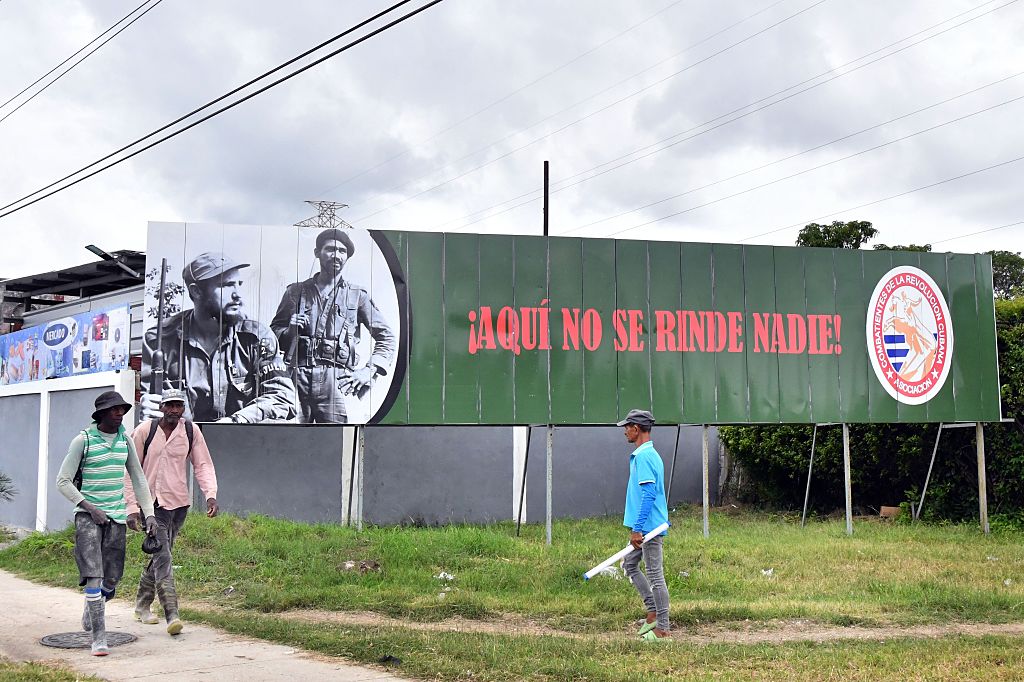
“I want to get Cuba done before I leave you,” President Donald Trump told a conservative radio host on Nov. 12. It is a reminder that, despite the historic beating his party took in the midterm elections, Trump continues to see Latin America as a crucial part of his legacy.
Though it was New York Post headline writers who coined the term “Donroe Doctrine,” a play on President James Monroe’s insistence two centuries ago that the United States alone would dominate the Americas, Trump has embraced the term as he thinks about his legacy.
The President has plenty of unfinished business in the region—and the incoming opposition-dominated Congress will surely launch investigations into many parts of Trump’s Latin America agenda. Hearings on U.S. management of Venezuelan oil revenues, U.S. strikes targeting boats in international waters, and the use of El Salvador’s maximum-security prison for deportees are a virtual certainty.
But Trump is more likely to defy Democratic lawmakers than to compromise with them, and, in truth, most of his policy priorities in the region can be pursued through executive actions, which can be undone by a successor but don’t require new legislation from Congress.
He can attempt to use tariffs and other trade measures to pressure governments, administer the Venezuela sanctions and licensing framework, provide security assistance to allies in the region, and even order military action in Cuba, as he has threatened.
In fact, the future of the Donroe Doctrine depends less on Congress than on the ambitions of his Secretary of State, Marco Rubio. Rubio may well leave government early to launch a run for president in 2028—but even if he decides to run, he is likely to keep his high-profile job into next year, giving him the chance to work on issues that matter most to him.
This brings us back to Cuba. Rubio, the Florida-born son of Cuban immigrants, remains eager to bring lasting change to the island. At a campaign rally in October, Trump joked that “We’ll drop [Rubio] in the middle of Cuba, he’ll solve that problem in about two minutes…Cuba’s coming our way.” The president will back plans to force an economic deal on the impoverished island’s Communist Party leadership.
Rubio will also want to set a firm timeline for multiparty elections in Venezuela, even if he leaves the administration for the campaign trail. Both the president and his top diplomat regard the arrest of former strongman Nicolás Maduro and the oil deals that Trump has struck with Maduro’s former loyalists, who remain in power in Caracas, as the administration’s greatest foreign policy success.
But for the Secretary of State and his own political future, setting Venezuela on a path toward democracy will be especially important. He is also likely to push for talks to restructure Venezuela’s foreign debt to help stabilize the country’s struggling economy.
And what about the rest of the region? Trump will continue to aggressively use the threat of tariffs to force President Claudia Sheinbaum of Mexico to maintain her country’s cooperation in preventing Central American migrant caravans from reaching the U.S. southern border.
On Nov. 12, Trump threatened that tariffs would be “IMMEDIATELY DOUBLED” if her commitment wavered. In Brazil, the recent presidential election didn’t turn out as the White House hoped, but Trump has indicated he’ll work with the re-elected President Luiz Inácio Lula da Silva on shared priorities.
The region’s more Trump-friendly governments hope to make the most of his remaining time in office. The White House will continue to provide financial and security assistance to Argentina’s Javier Milei, Ecuador’s Daniel Noboa and Colombia’s Abelardo de la Espriella.
Yet leaders across the region, whatever their relationship with Trump, expect to outlast him in office. They know that the next American president—Republican or Democrat—might well be someone far less interested in Latin America, and that all they can be sure of is that the U.S. role in the hemisphere may shift once again.
FIP XML/RSS/RDF Newsfeed Syndication https://freeinternetpress.com/rss.php
© 2026 FreeInternetPress.com
Free Internet Press is licensed under a Creative Commons Attribution 3.0 United States License. You may reuse or distribute original works on this site, with attribution per the above license. Any mirrored or quoted materials may be copyright their respective authors, publications, or outlets, as shown on their publication, indicated by the link in the news story. Such works are used under the fair use doctrine of United States copyright law. Should any materials be found overused or objectionable to the copyright holder, notification should be sent to [email protected], and the work will be removed and replaced with such notification.
Please email [email protected] with any questions.