

Hate Speech and the Marketplace of Ideas in Postwar America
In the 1940s, the Ku Klux Klan was on the rise in Indiana. The Klan had practically controlled the state's government in the 1920s, but the group became dormant during the following decade. In 1946, The Indianapolis Star exposed white supremacists' efforts to revive the Klan in the state and, more ominously, to start a chapter of the Columbians, Inc., a neo-Nazi organization that wore khaki shirts and red thunderbolt patches, preached a motto of "Race, Nation, and Faith," and swaggered in the manner of stormtroopers.
Indiana's leaders mobilized to pass an "anti-hate" law that penalized the new crime of "racketeering in hatred," defined as "acting with malice to create, advocate, spread, or disseminate hatred for or against any person, persons or group of persons, individually or collectively, by reason of race, color or religion which threatens to, tends to, or causes riot, disorder, interference with traffic upon the streets, destruction of property, breach of peace, violence, or denial of civil or constitutional rights." According to The Indiana Law Journal, no other enactment of the 1947 session of the Indiana General Assembly met with stronger public and legislative support. "The KKK in Indiana must be unrobed and stamped out for all time," Governor Ralph Gates declared. The anti-hate measure passed the legislature unanimously and was signed into law in February 1947. The penalty for "racketeering in hatred" was up to ten years' imprisonment and a $10,000 fine.
The law would be used to prevent racist gatherings and to punish hate group leaders. Police first used the law in September 1947, when they arrested a man from Gary for organizing a student strike to protest the admission of Black students to a high school. The following year, it was used to keep the pro-segregation Dixiecrat Party off the ballot. By the 1960s, the law was used to prosecute the distributors of antisemitic and racist "hate literature," including the American Nazi Party. The ACLU opposed the law as being "so loosely drawn as to endanger freedom of speech and press."
The Indiana law inspired similar laws across the country. A California measure against "racketeering in hatred" would have provided a $10,000 fine and a two-year prison term for anyone convicted of conspiring to "spread hatred because of race, color, or religion." So popular was the idea of "racketeering in hatred" laws that The Columbia Law Review published a model law as a guide to lawmakers in 1947. The law's provision centered around the mandate that "no person shall utter in a public place any false and defamatory statement of fact concerning a racial, religious or national group." The model law's authors claimed that it promoted freedom of speech, as the defamation of racial and religious groups engendered "anger, violent resentment, and a clear and present danger of grave evil in the community" and impeded the "free interchange" of ideas. By 1950, twenty-eight states had passed or were discussing "racketeering in hatred" laws. The Attorney General of Georgia, declaring that the state was in an emergency caused by racial hatred, announced a bill that would bar people from "associating or organizing for the purpose of creating or spreading hatred by reason of race, color, or religion." Many believed that the crime of "racketeering in hatred" was an idea whose time had come….
The year of the Indiana anti-hate law was a banner year in the history of civil rights. More antidiscrimination laws were passed in 1947 than at any point in history to that time. This included measures against discrimination in employment, education, public accommodations, and "group defamation." Legal treatises described group defamation laws as a category in an emerging body of civil rights law.
At the same time, 1947 saw celebratory discussions of freedom of speech and the "marketplace of ideas." The "marketplace" metaphor, as we have seen, dated back to Oliver Wendell Holmes's dissenting opinion in Abrams v. United States (1919), in which he wrote that "it is the theory of our Constitution" that "the best test of truth is the power of the thought to get itself accepted in the competition of the market." The restriction of free speech and thought under fascist regimes led many Americans to recognize the democratic significance of the free exchange of ideas. By the late 1940s, government censorship of film, literature, and other media had fallen out of favor. Censorship and paternalistic restrictions on speech were described as hallmarks of tyranny and totalitarianism, and freedom of thought, conscience, and choice were cast as essential individual rights.
The hate speech issue threw liberal goals of antidiscrimination and freedom of speech into tension. "Perhaps the most ticklish problem in the whole field of law is the question: how can we legislate against group hates without interfering with the constitutional right of free speech?" a columnist noted in 1946. "The best legal minds in the country have come up against this problem without any specific solution." Civil libertarians "bewail[ed]" "the evil of spreading race and religious hatred but fear the risk of limiting freedom of speech with any inhibition of hate propaganda."
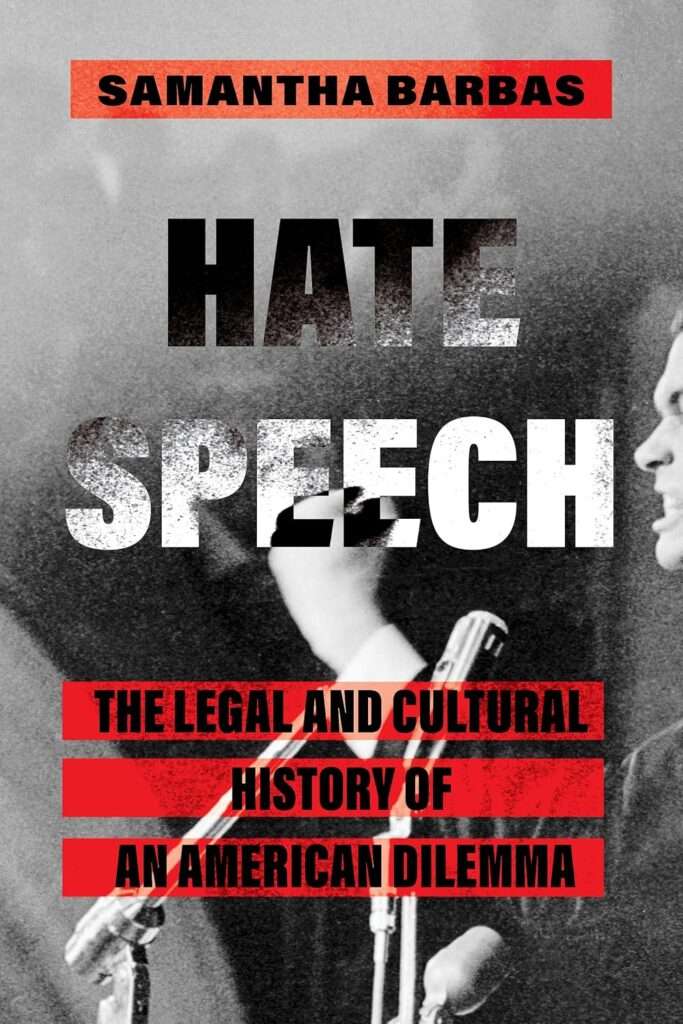
Excerpted from Hate Speech: The Legal and Cultural History of an American Dilemma by Samantha Barbas, courtesy of the University of California Press. Copyright © 2026.
The post Hate Speech and the Marketplace of Ideas in Postwar America appeared first on Reason Magazine.
FIP XML/RSS/RDF Newsfeed Syndication https://freeinternetpress.com/rss.php
© 2026 FreeInternetPress.com
Free Internet Press is licensed under a Creative Commons Attribution 3.0 United States License. You may reuse or distribute original works on this site, with attribution per the above license. Any mirrored or quoted materials may be copyright their respective authors, publications, or outlets, as shown on their publication, indicated by the link in the news story. Such works are used under the fair use doctrine of United States copyright law. Should any materials be found overused or objectionable to the copyright holder, notification should be sent to [email protected], and the work will be removed and replaced with such notification.
Please email [email protected] with any questions.