

A Guide to the 4 Caucuses That Could Shape the Democratic House
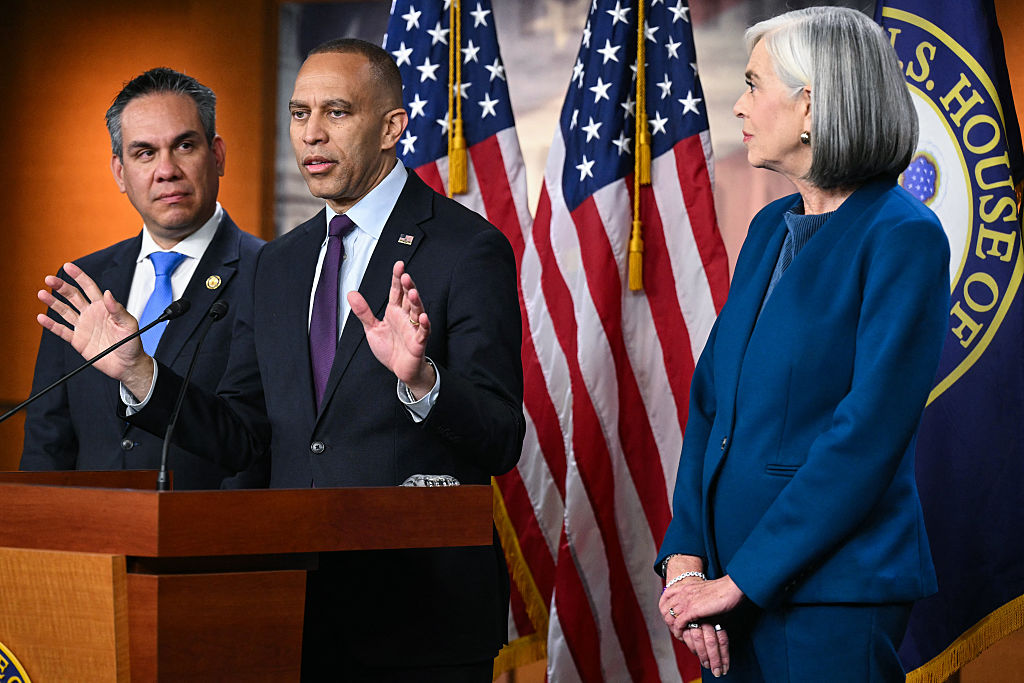
Democrats are preparing to take control of the House of Representatives with a substantially larger majority and an influx of new members who cover every corner of the party’s “big tent.”
Incoming Democratic freshman include several democratic socialists and even more moderates who won in competitive and Republican-leaning districts. Many campaigned on lowering costs, improving health care, and providing a practical alternative to President Donald Trump. Some promised to fight for more sweeping changes to the country's economic and political systems.
The competing priorities will be among the biggest challenges for Representative Hakeem Jeffries of New York, the speaker-designate, who will be tasked with maintaining unity in a party whose leaders frequently celebrate its ideological diversity.
Much of that debate will unfold within the House's major ideological and governing caucuses, which are preparing to welcome dozens of new members when Congress convenes in January.
The two heavyweights are the centrist New Democrat Coalition—the largest caucus—and the Congressional Progressive Caucus, but the smaller Blue Dog Coalition and the bipartisan Problem Solvers Caucus could also prove influential as Democrats confront the limits of what they can accomplish with Trump in the White House and a Senate where most major legislation will still require Republican support.
The new members will not necessarily divide neatly along ideological lines, and membership in the groups can overlap. But their growing ranks offer an early indication of where lawmakers may seek allies and how the party's internal balance of power could change.
Here are the four caucuses to watch in the next Congress.
New Democrat Coalition
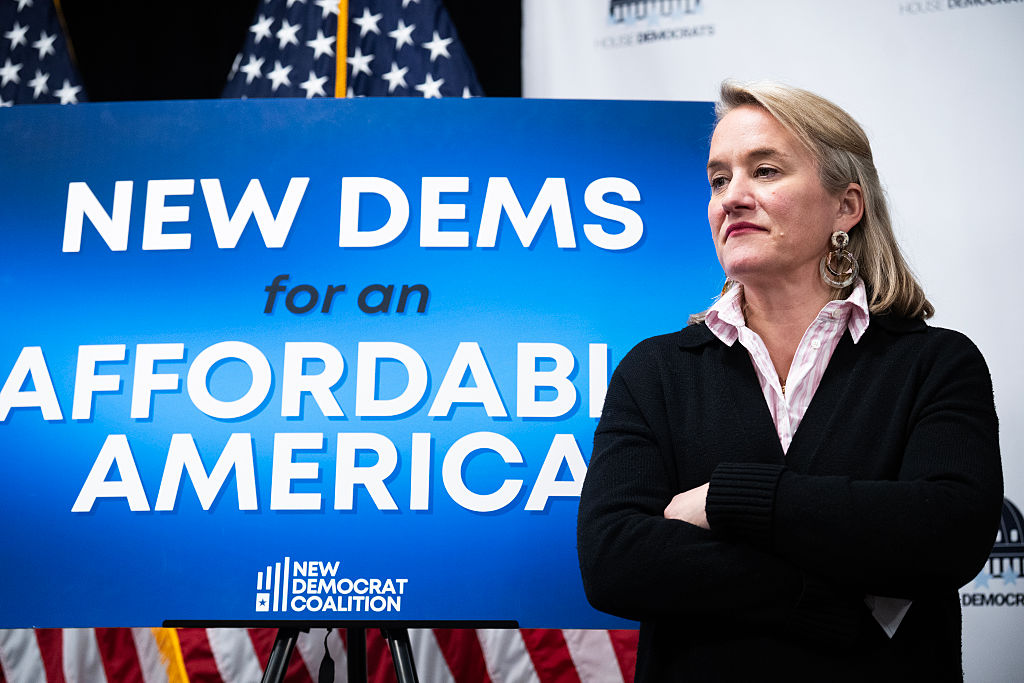
Estimated membership: 142 House Democrats
Members in the new Congress: The coalition added 40 members, including about 30 Democrats who flipped Republican-held seats in the midterms. Its new members include Representatives-elect Amish Shah and JoAnna Mendoza of Arizona; Richard Pan, Jacqui Irwin, and Marni von Wilpert of California; Jessica Killin and Manny Rutinel of Colorado; Luke Bronin of Connecticut; Pia Dandiya of Florida; Christina Bohannan, Lindsay James, and Sarah Trone Garriott of Iowa; Donna Miller and Melissa Bean of Illinois; J.D. Ford of Indiana; Zach Dembo of Kentucky; Adrian Boafo of Maryland; Sean McCann, Christina Hines, and Jeremy Moss of Michigan; Jake Johnson of Minnesota; Fred Wellman of Missouri; Jamie Ager of North Carolina; Denise Powell of Nebraska; Stefany Shaheen of New Hampshire; Rebecca Bennett of New Jersey; Teresa Benitez-Thompson of Nevada; Cait Conley of New York; Kristina Knickerbocker of Ohio; Bob Harvie, Paige Cognetti, and Janelle Stelson of Pennsylvania; Nancy Lacore of South Carolina; Bobby Pulido and Johnny Garcia of Texas; Ben McAdams of Utah; Shannon Taylor and Elaine Luria of Virginia; and Mitchell Berman and Rebecca Cooke of Wisconsin.
Leadership: Representative Nikki Budzinski of Illinois was elected as chairman for the next Congress. Other leaders include Representatives Gabe Vasquez of New Mexico, Kim Schrier of Washington, Greg Landsman of Ohio and Marilyn Strickland of Washington as vice chairs.
Overview: With over 140 members, the New Democrat Coalition is not only the largest Democratic caucus, it is poised to represent more than half of the Democrats in the House. Its members, who sit at the party's center, generally favor pragmatic economic policies, private-sector growth and bipartisan compromise. Its expansion reflects the importance of moderate candidates to Democrats' electoral success in November.
The coalition's growing membership could give it considerable influence over which bills reach the House floor, particularly as Jeffries seeks to demonstrate that the new Democratic majority can deliver results on the economic concerns that dominated the midterm campaign. Many of its incoming members represent competitive districts where voters may be skeptical of more expansive progressive proposals, giving them a strong political incentive to focus on measures that can attract broader support.
Policy priorities: The group outlined its legislative ambitions in an Affordability Agenda released in February, which focuses on five major household expenses: health care, housing, energy, family care and everyday essentials such as groceries. Its proposals include extending Affordable Care Act tax credits, strengthening Medicare and Medicaid, restricting surprise medical billing and expanding prescription drug price protections. On housing, the coalition wants to ease permitting and zoning restrictions to help build four million new homes over the next decade. It has also called for a national paid family and medical leave program, expanded access to universal prekindergarten and measures to increase competition in the grocery industry.
The coalition has placed particular emphasis on reversing Trump's tariffs, which its members argue have increased costs for consumers and businesses. Its agenda also calls for restoring congressional authority over trade policy and making it easier to build new energy infrastructure, including through changes to federal permitting requirements.
What to watch: The coalition's influence could prove especially significant in debates over health care, where some moderates favor expanding existing programs rather than pursuing Medicare for All, and in negotiations over which pieces of legislation stand a realistic chance of becoming law.
Congressional Progressive Caucus
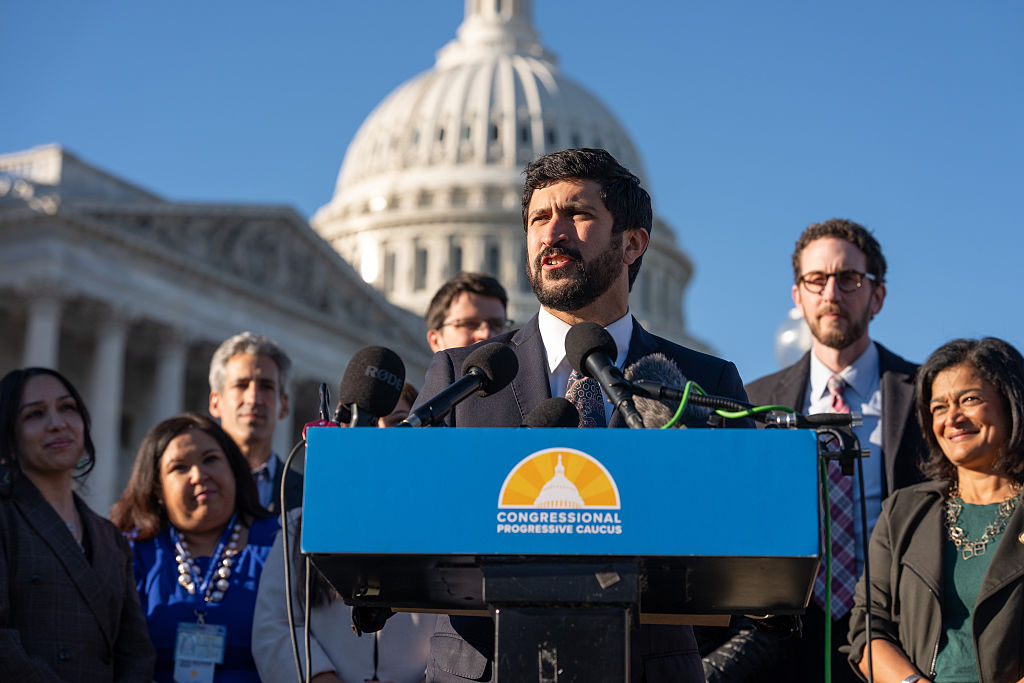
Estimated membership: 105+ House Democrats
Overview: While the Squad gets more media attention, all of its members belong to the much larger Congressional Progressive Caucus, which more formally represents the party's left wing in the House. The CPC has long advocated policies including universal health care, stronger labor protections, immigration reform, climate action, and greater government intervention to address economic inequality. Jeffries, the Speaker-designate, is a former CPC member.
Members in the new Congress: Six newly elected Democrats who belong to the Democratic Socialists of America are expected to join: Representatives-elect Darializa Avila Chevalier and Claire Valdez of New York; Melat Kiros of Colorado; Angela Gonzales-Torres of California; Donavan McKinney of Michigan; and Chris Rabb of Pennsylvania. The caucus also announced that Daniel Biss (IL-9), Bob Brooks (PA-7), Sam Forstag (MT-1) and Patty Garcia (IL-4) have joined, and more could be added to its roster.
Leadership: Representative Greg Casar of Texas serves as chairman, with Representative Ilhan Omar of Minnesota as deputy chair. Vice chairs include Representatives Ro Khanna of California and Rashida Tlaib of Michigan, and Representative Alexandria Ocasio-Cortez of New York serves on the executive board.
Policy priorities: In April, the CPC unveiled a 10-part New Affordability Agenda that would lower household expenses through a combination of expanded government benefits, tighter corporate regulation, and new restrictions on the influence of wealthy donors. Its proposals include capping child care expenses at 7% of family income, providing $20,000 in down payment assistance to first-time homebuyers, expanding rental assistance and creating a government program to sell discounted generic prescription drugs. Other proposals would require companies to pay double wages for overtime, guarantee workers two weeks of paid vacation, and prohibit businesses from using personal data and artificial intelligence to determine what prices it charges consumers. The agenda also calls for taxing excess profits earned by oil companies and returning the proceeds to consumers, restricting what the caucus considers excessive utility charges and abolishing super PACs.
What to watch: Although the caucus will remain smaller than the New Democrat Coalition, the arrival of newly elected democratic socialists could sharpen its demands of Democratic leadership. Several incoming lawmakers have already signaled that they intend to use their votes as leverage to secure commitments on issues like Medicare for All, defunding ICE, and ending American military assistance to Israel.
The breadth of the CPC’s agenda could create both opportunities for cooperation and points of friction with the party's moderate wing. Both the New Democrats and progressives have identified affordability as a top priority, and their proposals overlap on housing construction, prescription drug costs, and corporate competition. But the groups differ over how aggressively the federal government should intervene.
Blue Dog Coalition
Estimated membership: 23
Overview: The Blue Dogs describe themselves as fiscally responsible Democrats committed to practical economic policies, national security, and the needs of communities that are sometimes overlooked by national party leaders, including rural and tribal areas. Once a major force in the party, the Blue Dogs are now one of the smallest ideological groups in the House.
Members in the new Congress: The new class of Blue Dog Democrats includes Representatives-elect Johnny Garcia and Bobby Pulido of Texas, JoAnna Mendoza of Arizona, Jamie Ager and Paul Barringer of North Carolina, Sam Forstag of Montana, Rebecca Cooke and Mitchell Berman of Wisconsin, Jake Johnson of Minnesota, Zach Dembo of Kentucky, Nancy Lacore of South Carolina, Bob Brooks of Pennsylvania, Zack Mullock of New Jersey, and Eileen Laubacher of Colorado. Many of the incoming members unseated Republican incumbents.
Leadership: The coalition is led by three co-chairs: Representatives Marie Gluesenkamp Perez of Washington, Vicente Gonzalez of Texas, and Lou Correa of California. Representative Adam Gray of California will serve as Blue Dog PAC Chair.
Policy priorities: The Blue Dogs have traditionally emphasized fiscal discipline, government accountability, and a willingness to break with party leadership on issues important to their districts.
What to watch: The Blue Dogs could become important voices in negotiations over federal spending, particularly if Democratic leaders seek Republican support for legislation. They could also exert influence over the party's political messaging, arguing that retaining control of the House in 2028 will depend on demonstrating that Democrats can govern effectively in districts where conservative voters remain a substantial part of the electorate.
Bipartisan Problem Solvers Caucus
Estimated membership: Unknown. In the last Congress, it included 23 Democrats and 20 Republicans.
Overview: Unlike the other three groups, the Problem Solvers Caucus is explicitly bipartisan, bringing together moderate Democrats and Republicans who favor negotiation and compromise as a way to advance legislation in an increasingly polarized Congress.
Members in the new Congress: The caucus does not endorse candidates because of its bipartisan structure, and a list of incoming members has not been announced. Democrats retained 19 seats held by caucus members in the midterms, while Republicans lost 13 seats represented by members of the group.
Leadership: Unknown. The past chairs were Representatives Brian Fitzpatrick of Pennsylvania, a Republican who lost his seat, and Tom Suozzi, a Democrat who won re-election.
Policy priorities: The caucus describes its mission as building relationships across party lines and identifying areas of agreement on major policy questions. Its members have generally sought to position themselves as pragmatic lawmakers willing to negotiate with the opposing party, even when doing so invites criticism from their own political bases.
What to watch: While Democrats will control both chambers of Congress next year, Trump will remain in the White House, so any measure that reaches the President's desk will be subject to his veto. Most major bills will also still need Republican support to overcome the Senate filibuster. The Problem Solvers Caucus could play an important role in bridging those divides, particularly on issues such as health care and government funding.
FIP XML/RSS/RDF Newsfeed Syndication https://freeinternetpress.com/rss.php
© 2026 FreeInternetPress.com
Free Internet Press is licensed under a Creative Commons Attribution 3.0 United States License. You may reuse or distribute original works on this site, with attribution per the above license. Any mirrored or quoted materials may be copyright their respective authors, publications, or outlets, as shown on their publication, indicated by the link in the news story. Such works are used under the fair use doctrine of United States copyright law. Should any materials be found overused or objectionable to the copyright holder, notification should be sent to [email protected], and the work will be removed and replaced with such notification.
Please email [email protected] with any questions.