

15 Things Mosquito Experts Never Do in the Summer
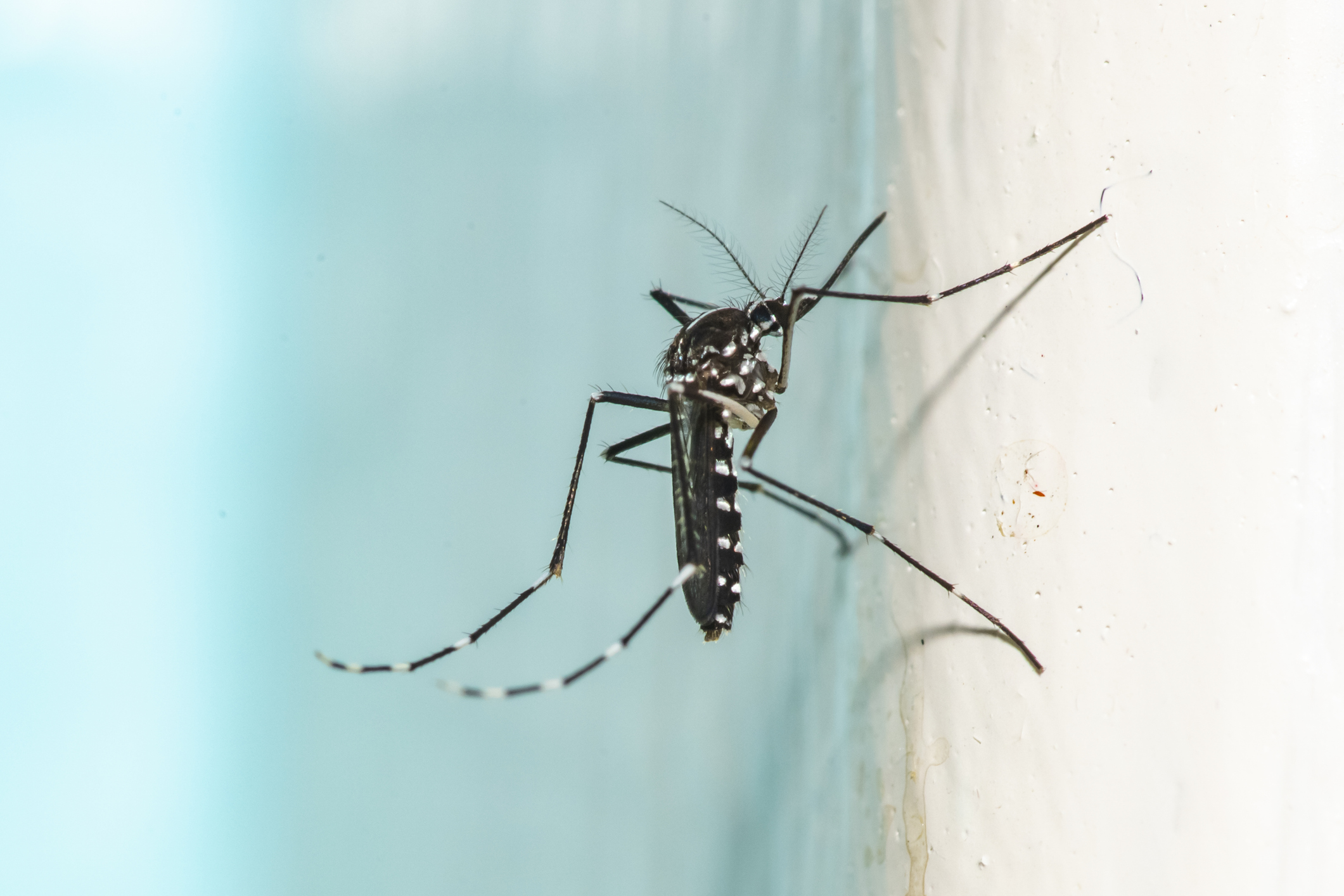
If you think mosquitoes suck, science is on your side. They don't actually bite, explains Lyric Bartholomay, a medical entomologist at the University of Wisconsin–Madison School of Veterinary Medicine: They have sucking mouthparts, not biting ones. "So they literally suck," she says, "and they figuratively suck, too."
Their resume only gets worse from there. The mosquito is the deadliest animal on the planet, killing more people than any other creature by spreading malaria, dengue, West Nile virus, Zika, chikungunya, and other diseases. In the contiguous U.S., West Nile is the leading mosquito-borne disease, sickening about 2,000 people and killing more than 130 every year.
There isn’t one mosquito-borne-disease hot spot in the U.S. West Nile virus has been reported across the contiguous U.S., and where cases surge can change from year to year. Most locally acquired dengue transmission happens in Puerto Rico and other U.S. territories, though limited local transmission has also occurred in Florida, Texas, Arizona, California, and Hawaii.
Fortunately, protecting yourself doesn’t require surrendering your backyard—or spending the summer sealed indoors. It does require avoiding some surprisingly common mistakes. We asked mosquito experts what they never do during the summer, from overlooking tiny pools of standing water to relying on products that don’t actually work.
They don’t ignore standing water
Bird baths, koi ponds, and fountains are the easy stuff—the water you can see from the kitchen window. The real trouble is the more hidden water.
Louisa Messenger, a vector-borne disease researcher at the University of Nevada, Las Vegas, points to a bottle cap that has rolled underneath a shrub and catches a little spray whenever the sprinklers run. It holds less than a milliliter of water, but that’s enough for certain daytime-biting mosquitoes to lay their eggs. “You would never find that, never in 1,000 years,” she says. “But your mosquitoes will find that.”
Other easily missed breeding spots include a tiny pocket of water beneath the soil in a potted plant, a discarded tire, or a planter saucer. Maintained, chlorinated pools and fountains with moving water generally aren’t the problem. Mosquitoes want still water—and the smaller the pool, the easier it is to miss.
They never walk past a container without glancing inside
Once mosquito experts learn what a breeding spot looks like, they see them everywhere.
In her own yard, a tarp left crumpled over some lumber became a collection of tiny pools after it rained. Buckets and cups forgotten after parties are equally inviting. Then there’s her neighbor’s wheelbarrow, which is full of weeds and refills whenever it rains. “I keep sneaking over there and emptying it out,” Bartholomay says. “The mosquitoes just love it.”
Where you live determines where else you need to look. In parts of Florida, some plants, like ornamental bromeliads, collect water in the cups of their leaves, allowing mosquitoes to breed several feet above the ground. Daniel Markowski, technical advisor with the American Mosquito Control Association, flags children’s toys—dump trucks, sand pails, plastic cups—and buried downspouts that aren’t draining properly. Mosquitoes can breed in the trapped water underground, then fly in and out through the top.
Once you find standing water, dump it. Scrub the sides of containers you’re keeping to dislodge any eggs, then turn them upside down so they can’t refill. Bromeliads should be flushed with a strong stream from a hose, while blocked downspouts need to be cleared or repaired so they drain completely.
The habit follows Markowski everywhere. “Walking my dog down the street, I see something and think, ‘Oh, yeah, they need to empty that bird bath,’” he says. “You just can’t help but make a mental note of everywhere you see standing water.”
They never let a bird bath sit untouched
A bird bath can become a mosquito nursery in about a week. Markowski recommends dumping and refilling it at least that often. The U.S. Centers for Disease Control and Prevention advises scrubbing it too, which helps dislodge eggs stuck to the sides. Stick with plain water: Bleach and other harsh chemicals can leave residue that harms birds.
Do the same weekly sweep for flowerpot saucers, buckets, toys, tarps, and anything else that has collected water. Bartholomay’s rule is simple: “Just take away their habitat.”
Gutters don’t necessarily need weekly attention, but they do need to stay clear. Markowski cleans his every spring, before mosquito season gets underway; Bartholomay uses gutter guards to keep water from pooling in the first place.
They wouldn’t dare underestimate the power of a fan
One of Bartholomay’s favorite mosquito-fighting tools is low-tech: a fan. Mosquitoes are weak flyers, so even a modest breeze makes it harder for them to land. “You can make your own breeze with a fan,” she says.
When her family plans to eat outside, she points a fan toward the table and switches on a spatial repellent—a small device that heats and releases repellent into the surrounding air—about 10 minutes before they sit down. Together, they make the patio much less hospitable to pests before dinner even arrives.
They never assume daylight means they’re safe
The dawn-and-dusk rule most people think applies to mosquitoes isn’t comprehensive. The pests are also active midday.
Culex mosquitoes that spread West Nile virus tend to feed around dawn and dusk. But invasive Aedes mosquitoes, including Asian tiger mosquitoes, are “really vicious daytime biters,” Bartholomay says.
Aedes mosquitoes can transmit dengue, Zika, yellow fever, and chikungunya. These viruses aren’t endemic in the continental U.S., but travelers can bring them home after getting infected elsewhere. If a local Aedes mosquito bites an infected traveler while the virus is circulating in their blood, the mosquito can pick it up. After the virus multiplies inside the mosquito, it can spread dengue by biting someone else—starting a local chain of transmission.
Daylight, in other words, offers no protection. “You’re out in their environment in the daytime, and so it’s up to you to protect yourself,” Messenger says. “They will come and find you.”
They never assume a drought—or a desert—means no mosquitoes
Drought may knock back some mosquitoes, but it doesn’t get rid of all of them.
“I wouldn’t assume that when it’s really hot and dry, there’s no mosquito risk,” Bartholomay says. Species that flourish after heavy rain may dwindle, but some of the mosquitoes that transmit West Nile virus continue doing just fine.
Moving to the desert doesn't guarantee an escape, either. Messenger lives in Las Vegas, where she hears from people who expected the heat and aridity to leave them mosquito-free. Instead, Southern Nevada has a significant mosquito problem, as do parts of Arizona and Utah.
“Mosquitoes are super adaptable,” Messenger says. Some of her friends and colleagues are being “absolutely shredded”—bitten so badly they can’t enjoy their yards.
They won’t grab a repellent without checking the label
When it comes to bug spray, mosquito experts worry less about the branding than the active ingredient and concentration.
Markowski favors products with 20% DEET. “It’s the gold standard,” he says. “It’s been around for 50-plus years for good reason.” Picaridin is another well-supported option. Bartholomay uses the U.S. Environmental Protection Agency’s searchable repellent list to compare ingredients and protection times rather than guessing in the store aisle. Products with a lower concentration, for example, typically need to be reapplied sooner.
They don’t rely on repellent alone
When mosquitoes are especially intense, the experts add a physical barrier. Markowski wears long pants and sleeves—even when it’s 95°F outside. “I know no one’s going to do it,” he says. “But I’m not getting bit.” Lightweight, loose-fitting fabrics make the strategy more realistic in summer.
Pay particular attention to your feet and ankles, which Wolff says mosquitoes find especially attractive. In higher-risk areas, she trades sandals for socks and closed shoes.
Bartholomay goes further during fieldwork, wearing permethrin-treated clothing and, when mosquitoes are truly out of control, a net over her head—so she doesn’t end up “sucking mosquitoes into [her] nose holes.” Permethrin should be applied only to clothing and gear, never directly to skin, and always according to the label.
They never rely exclusively on an untested natural remedy
Natural doesn’t necessarily mean useless, but it does mean less certain.
Citronella, lemongrass, cinnamon, and other botanical extracts may repel mosquitoes to some degree. But if the finished product isn’t EPA-registered, you might not know how well it works—or how long the protection lasts. “There’s nothing wrong with people using that,” Messenger says. “But I wouldn’t rely on it exclusively.”
Gabriella Wolff, an assistant professor of biology at Case Western Reserve University in Ohio, draws the line based on risk. Around her Cleveland neighborhood, she sometimes mixes cinnamon oil into lotion. In a place where mosquito-borne disease is a bigger concern, she reaches for DEET or picaridin.
They never count on a citronella candle
Asked what he would tell someone relying on citronella candles alone, Markowski doesn’t hesitate: “I’d say good luck.”
Citronella does have mild repellent properties—but the problem is delivery. If the breeze carries the plume downwind while you’re sitting upwind, the mosquitoes might enjoy a citronella-free meal of you.
They stay away from ultrasonic gadgets
Wolff studies how mosquitoes hear, making her a good person to ask about ultrasonic repellents—small electronic devices, often sold as plug-ins or portable units, that claim to drive mosquitoes away by emitting high-frequency sounds humans can’t hear. Her verdict is straightforward: “So far, we haven’t found any evidence that mosquitoes respond to ultrasonic frequencies.”
Researchers are exploring whether certain lower-frequency sounds—including noises made by mosquito predators—can disrupt their behavior. For now, though, that’s an experiment in a lab, not a reason to buy a gadget online.
Ultrasonic devices aren’t the only products that make mosquito experts skeptical. Markowski is similarly unimpressed by repellent bracelets, stickers, and passive patches, which release repellent from one small spot. At best, a bracelet protects the small area around your wrist. Your neck, legs, and ankles remain available—and mosquitoes are particularly drawn to feet and ankles, Wolff notes. When they’re out in force, socks and closed shoes offer considerably more coverage.
They never prop the back door open
During the hottest part of the day, mosquitoes often rest in cool, shaded eaves—sometimes directly above your door. Prop it open, and they have an easy route inside. “We’ve all seen the flies fly in,” Markowski says. “Well, mosquitoes are flying in with them.”
He insists on intact, tight-fitting screens on windows, doors, and patio sliders. Otherwise, mosquitoes can get inside and feed on you while you sleep.
Bartholomay hates feeling sealed indoors, so she relies on screens and applies the national-park rule to mosquitoes: Don’t feed the wildlife. “Don’t feed them,” she says. “Don’t give them your blood.”
They try not to scratch with abandon
Everyone knows this rule, and almost nobody obeys it. Messenger included: “You’re not supposed to scratch them, but obviously I do.”
Scratching can break the skin, which raises the risk of infection and scarring. Instead, try a cold compress or an over-the-counter anti-itch or antihistamine cream. Wolff also likes targeted heat. Small handheld gadgets that you press directly against the bite use a ceramic tip to warm the skin for a few seconds; research suggests this controlled heat can reduce itching and pain. Follow the device instructions; don’t substitute scalding tap water, which can burn the skin.
They never forget that pets are on the menu
Your pets have blood too, and mosquitoes know it.
Mosquitoes transmit heartworm disease, a connection Markowski says surprises many dog owners. Heartworm can damage the heart, lungs, and blood vessels, and advanced cases are harder and riskier to treat. Ask your veterinarian about year-round prevention; don’t wait until mosquitoes become noticeable.
The stakes are high for horses, too. West Nile virus kills an estimated 22% to 44% of horses diagnosed with it, while eastern equine encephalitis can kill more than 90% of horses without prior immunity. Vaccines for both are considered core vaccinations for horses.
Don’t improvise by spraying an animal with your own repellent. Some human formulations can make pets sick, so stick with veterinarian-recommended preventives and vaccines—and work on keeping mosquitoes out of their environment.
They never surrender the summer to mosquitoes
Mosquito experts don’t spend the summer hiding indoors. Messenger considers it the best time of year. Markowski says he would never give up the outdoor activities he enjoys.
Messenger doesn’t rule out having your yard professionally treated if mosquitoes are making it impossible to enjoy. But the relief may be temporary: A private pest-control treatment “will probably be effective for a few weeks,” she says. “If you’re not treating everybody’s house, you’re just going to be doing that all summer.” Before hiring a company, she suggests contacting your local or state health department and asking whether your community has a mosquito-control program. Not every community does, and services vary. Some programs investigate complaints by setting small surveillance traps—often baited with light, carbon dioxide, water, or another attractant—to collect mosquitoes, identify the species, and gauge where activity is concentrated.
Experts also know that an immaculate yard can only get you so far. If a daytime-biting female mosquito can find water, sugar, a mate, and blood within about 100 meters, she has little reason to leave. The mosquito on your ankle is probably “homegrown,” as Messenger puts it—yours or your neighbor’s. Control what you can, then protect yourself from the rest.
Bartholomay wants that knowledge to feel empowering, not frightening. “Get outside, enjoy,” she says, “and don’t get bitten.”
FIP XML/RSS/RDF Newsfeed Syndication https://freeinternetpress.com/rss.php
© 2026 FreeInternetPress.com
Free Internet Press is licensed under a Creative Commons Attribution 3.0 United States License. You may reuse or distribute original works on this site, with attribution per the above license. Any mirrored or quoted materials may be copyright their respective authors, publications, or outlets, as shown on their publication, indicated by the link in the news story. Such works are used under the fair use doctrine of United States copyright law. Should any materials be found overused or objectionable to the copyright holder, notification should be sent to [email protected], and the work will be removed and replaced with such notification.
Please email [email protected] with any questions.